From Manual Inspection to Predictive Maintenance: Smart Pulley Monitoring for a Power Plant Coal Conveyor
| Product application | Conveyor Pulley Monitoring System |
| Pulley Monitoring | 1200mm |
| Industry | Power-fire plant |
| Material | Coal |
Coal conveying systems in large thermal power plants must operate reliably over long periods. Any abnormal condition in a critical pulley or bearing can affect coal handling and plant operations.
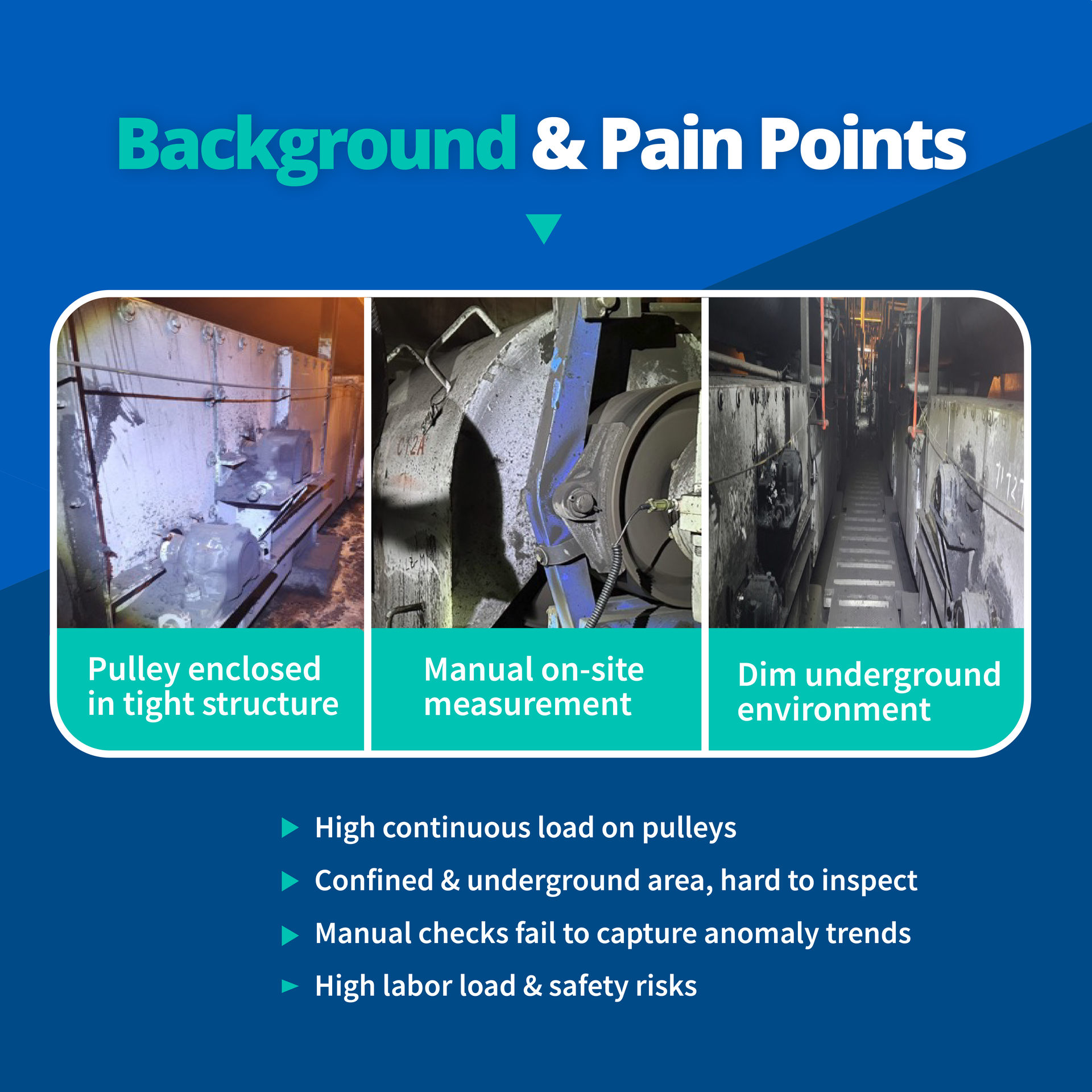
In this case, the coal conveyor uses an air-supported conveyor with a belt turnover design, incorporating drive, tail, turnover, bend, and take-up pulleys. Some pulleys operate under high loads, while the enclosed underground environment makes routine inspection and continuous condition monitoring difficult.
To improve equipment visibility, JIMWAY implemented a smart conveyor pulley monitoring system combining wireless sensing, remote monitoring, and automatic alerts. This enabled the maintenance team to move from manual inspection toward data-driven predictive maintenance.
Challenges
1. High Pulley Loads Increased Bearing Risk
The belt turnover design places additional loads and stress on turnover and bend pulleys. The single-motor drive also creates higher impact loads during startup, making pulley bearings critical points for condition monitoring.
2. Manual Inspection Was Difficult in Enclosed Areas
Several pulleys are installed in enclosed underground areas with limited access. Inspectors had to enter the equipment area for measurements. Equipment condition was mainly assessed through scheduled inspections and operator experience. Without continuous data, gradual bearing deterioration was difficult to identify from individual measurements.
3. Limited Early Warning of Abnormal Conditions
Manual inspections only capture equipment conditions at specific moments. Early changes in bearing vibration or temperature could therefore go unnoticed between inspections.For critical coal-handling equipment, late detection can increase emergency maintenance pressure and the risk of unplanned downtime.
Solution
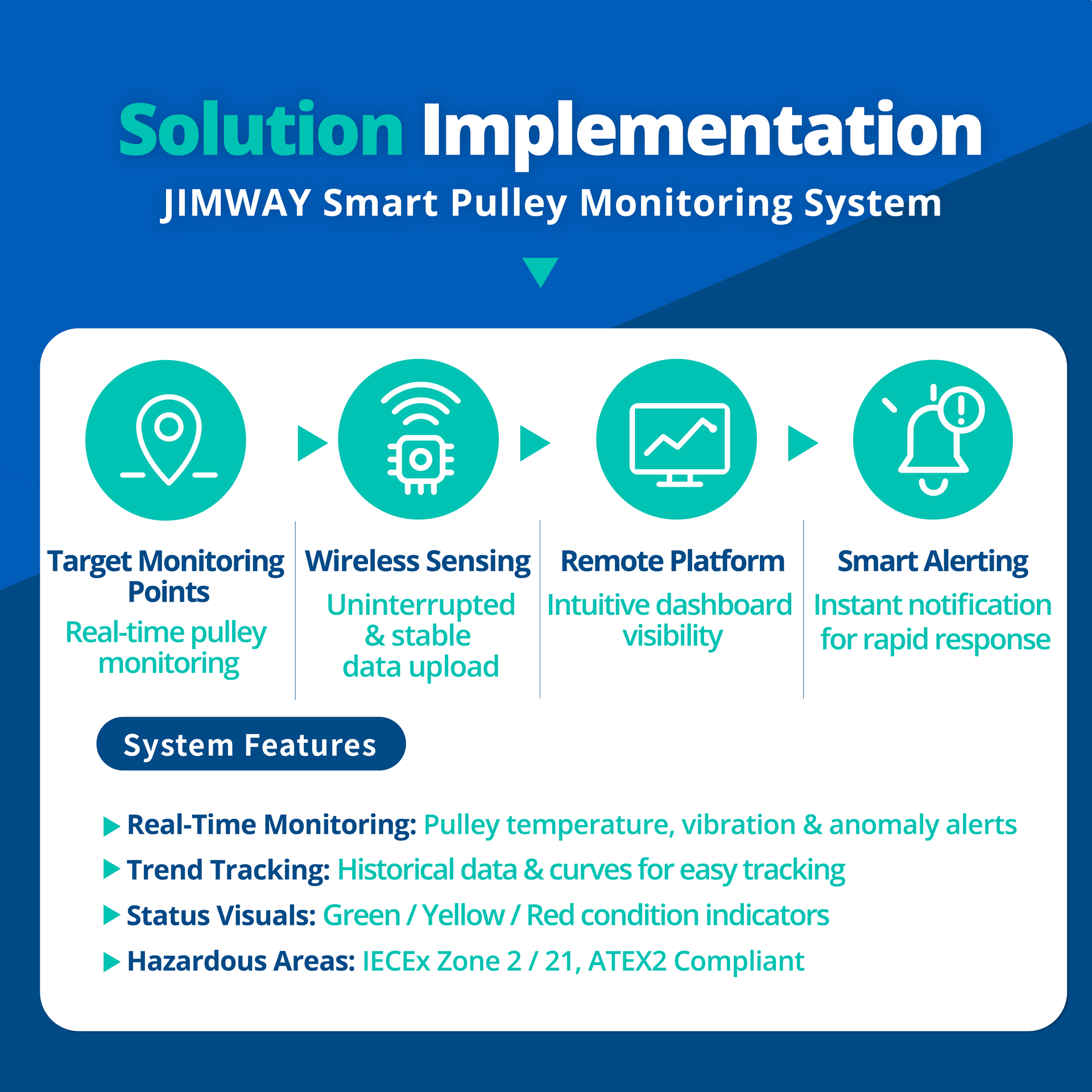
To address limited access, multiple monitoring points, and the need for continuous bearing condition tracking, JIMWAY installed a wireless temperature and vibration monitoring system covering data collection, transmission, remote monitoring, and analysis.
- Wireless Sensors Simplify Retrofit Installation
Because many monitoring points are located in enclosed underground areas, conventional cabling would have made installation difficult.Wireless temperature and vibration sensors with magnetic mounting reduced cabling requirements. Long-range wireless communication also allowed the monitoring system to be added to the existing conveyor with minimal installation complexity.
- Continuous Trend Monitoring
The system continuously tracks bearing temperature and vibration and sends the data to a remote monitoring platform. Maintenance teams can review real-time readings, historical records, and trend charts to identify gradual changes instead of relying on isolated inspection results.Combined with the Phoenix GM analysis system, vibration and frequency-spectrum data provide additional support for identifying equipment abnormalities and assessing equipment condition.
- Early Alerts for Faster Response
When monitored values exceed predefined thresholds, the system automatically issues an alert.Maintenance personnel can identify equipment requiring attention without waiting for the next scheduled inspection, allowing maintenance to be planned according to actual equipment condition.
Improvements
The monitoring system has operated reliably for more than one year and has successfully identified abnormal conditions in multiple pulley bearings. One representative case involved the C-12A P13 turnover pulley. The system detected a continuing increase in vibration, prompting the maintenance team to inspect the equipment and schedule replacement.
After replacement, vibration levels across all three axes decreased significantly, confirming the improvement in operating condition and demonstrating the value of continuous monitoring for maintenance decisions.
Continuous monitoring also changed the maintenance approach from fixed manual inspections to automatic hourly monitoring with immediate inspection when an abnormal condition is detected. This reduces the need for personnel to frequently enter enclosed equipment areas for measurements.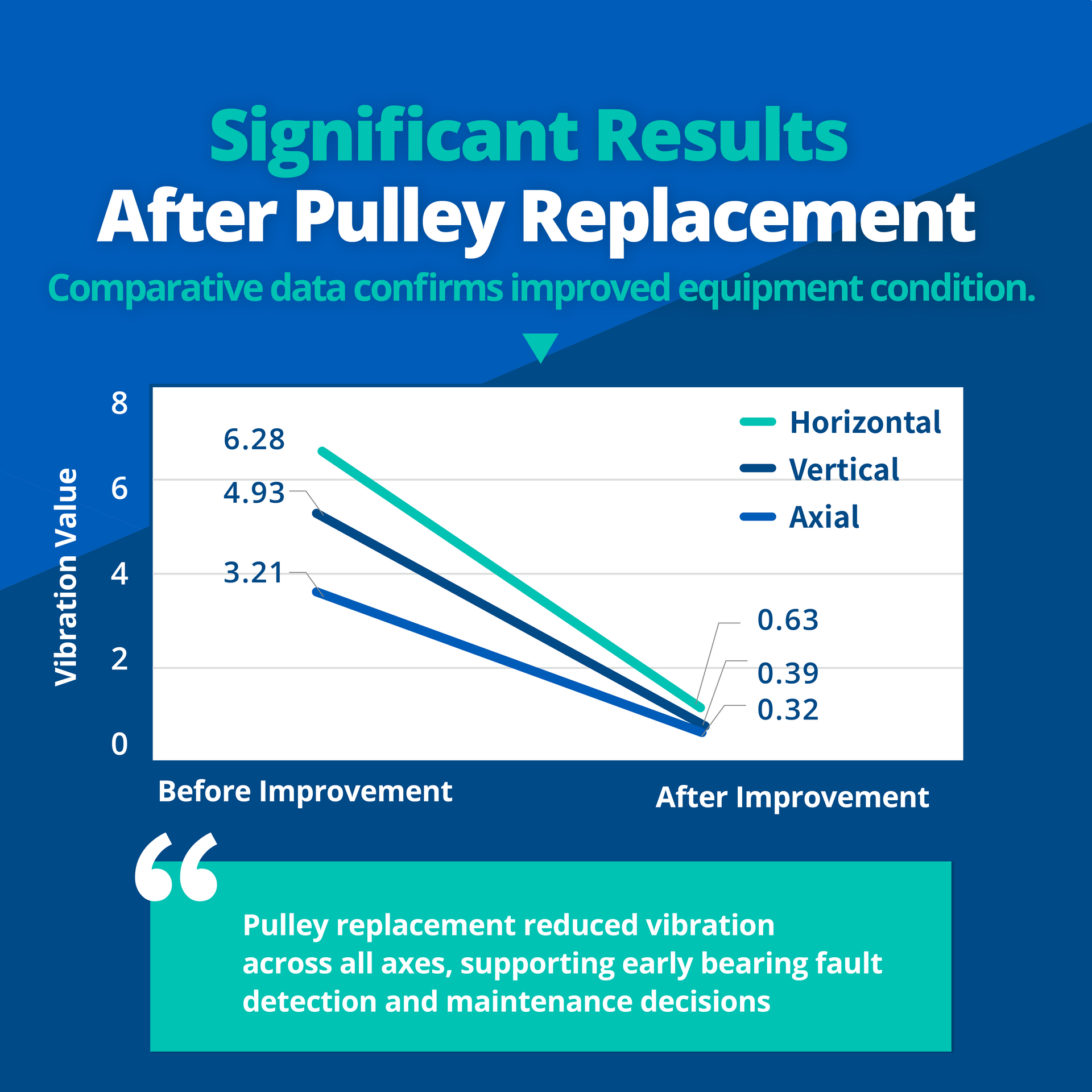
Comparison
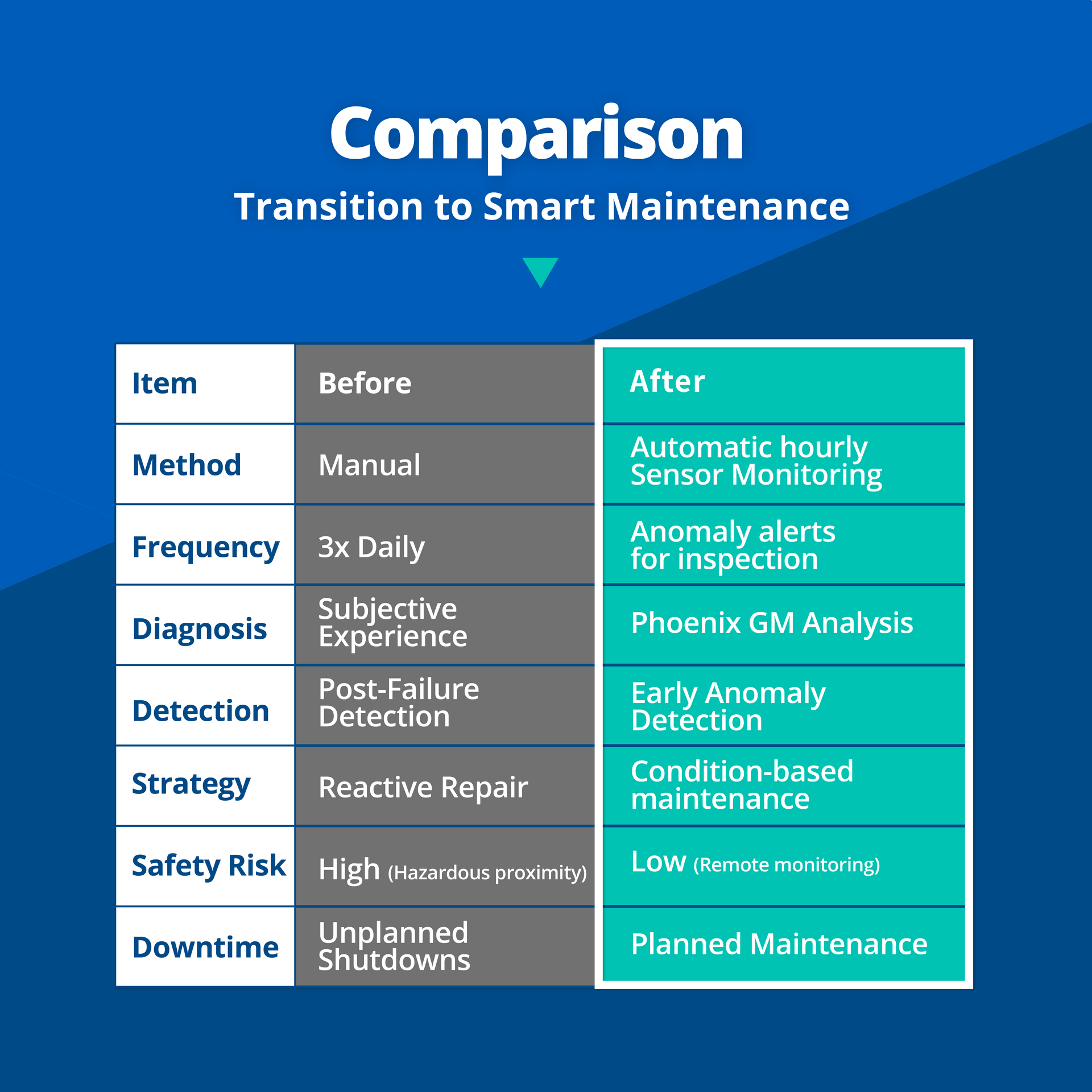
The key improvement was not simply adding sensors. Equipment information that was previously collected through separate manual inspections is now continuously recorded, compared, and analyzed, giving the maintenance team a clearer view of equipment health.
Conclusion
For large coal conveying systems, pulleys and bearings operate continuously under demanding loads. If abnormal conditions are not detected early, conveyor reliability may be affected.
JIMWAY's smart conveyor pulley monitoring system combines wireless sensing, remote monitoring, trend analysis, and automatic alerts to support a shift from periodic manual inspection to predictive maintenance based on actual equipment condition.
With more timely and complete equipment data, maintenance teams can plan inspections and repairs before problems develop into failures. This helps reduce unplanned downtime, limits the need for personnel to enter restricted areas, and improves the overall reliability and maintenance efficiency of the coal conveying system.